Structural Drying in Grand Rapids, MI
Once the water is out, wet framing, subfloors and drywall still hold moisture. Grand Rapids crews dry them with dehumidifiers and air movers until readings reach the S500 target.
(888) 612-9219Request a drying plan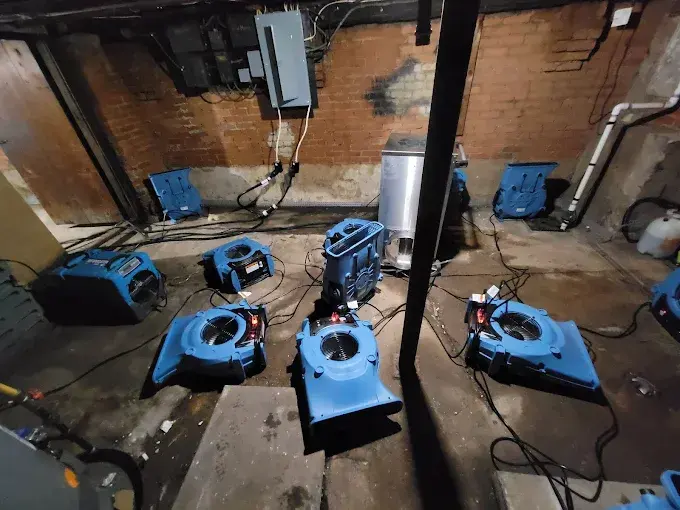
What to do right now about structural drying and dehumidification in Grand Rapids
Water extraction removes what can be pumped, but drywall, studs, subfloors and concrete still hold moisture. Structural drying is the planned removal of that water using air movement and dehumidification. The S500 standard sorts losses by water category and by how much material is wet, which sets the equipment.
Keep the heat on
Warm air helps moisture leave the materials and keeps dehumidifiers efficient.
Close the room
Shut doors and windows so dry air stays in the drying area.
Leave equipment alone
Do not unplug or move air movers, which are set from readings.
Plan for noise
Equipment runs day and night for several days, so plan around it.
How structural drying and dehumidification is handled in Grand Rapids, MI
Classify
Water category and drying class are set from the first readings.
Place gear
Dehumidifiers and air movers go where the moisture is.
Monitor
Readings are logged and equipment is adjusted every visit.
Release
Dry readings are logged, the owner signs off and the equipment is removed.
What does structural drying and dehumidification cost in Grand Rapids, MI?
Structural drying usually costs $1,500 to $12,000 or more, driven by class, the number of rooms and the dense materials involved. Equipment days and monitoring visits make up most of the cost.
Small area, light class
- A few air movers
- One LGR dehumidifier
- Several days of logs
Basement or full floor
- Walls and ceilings wet
- Several LGR dehumidifiers
- Daily equipment changes
Dense materials
- Block, slab and oak
- Desiccant drying units
- Extended monitoring visits
Ranges are typical, not a quote. For a planning number on your own loss, run the water damage cost calculator; the on-site walkthrough sets the real scope.
How classes change the plan
A small area of low porosity material is a lighter job than a whole floor of wet carpet, drywall and framing. Dense materials such as block, slab and oak dry slowly and can need desiccant units. The class is set at the start and revisited as readings change.
Equipment and monitoring
- Low grain refrigerant dehumidifiers pull moisture from the air
- Air movers push dry air across walls and floors
- Meters and a thermal camera track progress each visit
Equipment is counted and placed for the affected area, not guessed from the room size. Each visit, readings are logged for the same spots, and units are moved, added or removed as the numbers fall.
Proving the finish
Drying stops when readings in affected materials match dry reference points taken from unaffected areas. Those logs go to the owner and the adjuster. After a flood, basement flooding cleanup pairs removal with this drying, and water extraction comes first.
How structural drying and dehumidification gets done to standard
Rapid local response
Wyoming water damage pros run 24/7 dispatch, and the response team treats standing water as urgent at any hour, holidays included.
IICRC S500 drying standard
The drying team follows IICRC S500, the industry drying standard: moisture mapping first, then structural drying, not just surface drying.
Claim-ready documentation
Each loss gets a moisture map, daily readings and timestamped photos, the file an adjuster reads before deciding a claim.
West Michigan water know-how
Block basements, sump pits, floor drains, frozen pipes and ice dams: local water damage experts know how water moves through a Kent County house.
Structural drying and dehumidification across Grand Rapids and nearby communities
Drying jobs run in Heritage Hill, Eastown, Alger Heights, Creston and Midtown, in ZIP codes 49503, 49505 and 49506 and the surrounding Kent County communities, in homes, offices and small shops alike.
The same service nearby: structural drying and dehumidification in Wyoming, East Grand Rapids, Walker.
Related water damage services in Grand Rapids
Structural Drying and Dehumidification questions in Grand Rapids, MI
Q01How long does structural drying take?
Three to five days is common for many jobs, but dense materials and large areas take longer. Readings decide when equipment leaves.
Q02Why not just use fans?
Fans move air but do not remove water from it. Dehumidifiers pull moisture out of the air so materials can keep releasing it.
Q03What is a drying class?
A class describes how much water the materials took and how quickly it can leave. Higher classes need more equipment and more time.
Q04Can drywall stay in place?
Often, when it is clean water and the readings show it drying. Contaminated drywall is removed instead.
Q05How is the finish proven?
Readings from wet areas are compared with dry reference points from unaffected materials, and the logs are shared with the adjuster.
Q06Is mold a risk during drying?
Wet materials left alone for days can grow mold, which is why drying starts early and readings track each day.
Dry the structure to a measured finish
Call dispatch, describe what got wet, and a crew is sent with meters, dehumidifiers and air movers to set the plan.
(888) 612-9219Set up a drying plan