Commercial Water Damage in Grand Rapids, MI
Hotels, medical buildings, campuses and offices near the Grand River have large floor areas where a leak spreads fast. Grand Rapids crews phase the extraction and drying to keep unaffected areas open.
(888) 612-9219Call about a business leak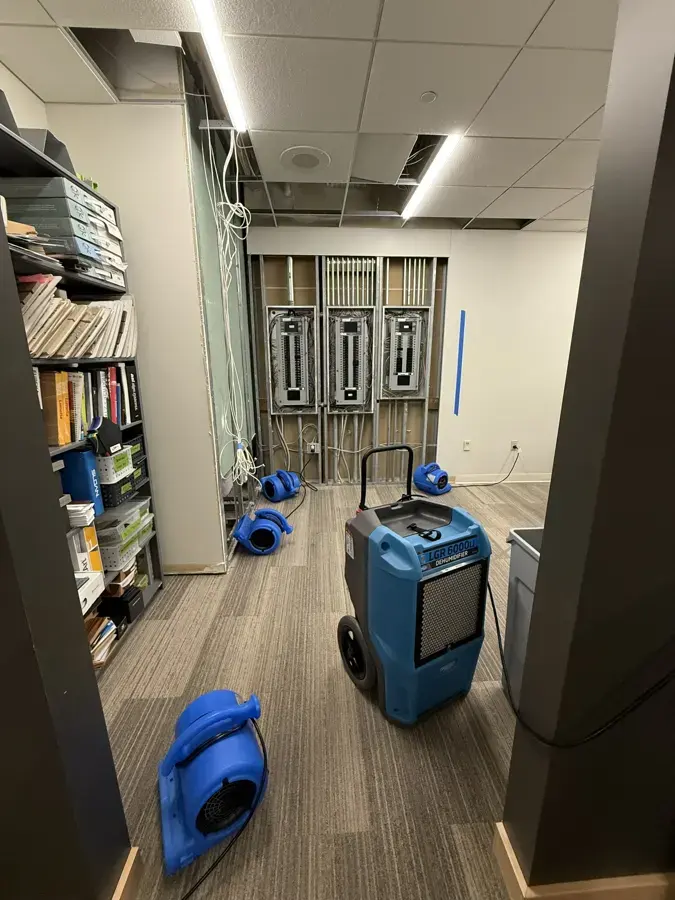
What to do right now about commercial water damage in Grand Rapids
Downtown hotels, medical campus buildings, university buildings and furniture makers near the Grand River carry large floor areas, and a leak on one level can reach several tenants below. The first call sets the scope by suite, floor and use.
Isolate the leak
Shut the valve or the zone feeding the leak, if building staff can reach it.
Protect records
Move files, electronics and inventory away from wet floors.
Notify management
Tell the property manager and any tenants below the leak.
Capture the scene
Photograph each affected suite and the source.
How commercial water damage is handled in Grand Rapids, MI
Walk and map
Every suite is metered and the wet boundary is marked.
Contain
Barriers and zoned equipment protect dry space.
Extract and dry
Water comes out first, then dehumidifiers and air movers run in phases.
Report
Logs and photos are organized by suite for the manager and carrier.
What does commercial water damage cost in Grand Rapids, MI?
Commercial water losses usually cost $3,000 to $50,000 or more. Floor area, the number of tenant spaces, the water category and the need for phased work set the written estimate.
One suite or store
- One tenant space
- Carpet tile extraction
- Drying and logs
Multiple suites
- Several spaces or floors
- Containment between areas
- Phased drying
Large or Category 3
- Open floor plans
- Sewage or flood water
- Large loss equipment
Ranges are typical, not a quote. For a planning number on your own loss, run the water damage cost calculator; the on-site walkthrough sets the real scope.
Scope and containment
Crews walk each affected space with meters, mark the wet boundaries and set barriers so dry suites stay open. Extraction starts in the highest risk areas, such as server rooms, records storage and patient spaces, then moves outward.
What gets dried
- Carpet tile and pad lifted, dried or replaced
- Ceiling tiles and grid, which often fail fast when wet
- Walls, subfloors and concrete under floor coverings
Large open floors use more equipment and more power, so crews plan circuits and noise with building management. Sewage or storm water losses follow sewage backup cleanup rules, with containment and protective gear.
Documentation for owners
Property managers and carriers expect room by room records. Moisture logs, photos and equipment counts are kept for each space, which supports claims and tenant notices. The drying method is the one in structural drying.
How commercial water damage gets done to standard
Rapid local response
Wyoming water damage pros run 24/7 dispatch, and the response team treats standing water as urgent at any hour, holidays included.
IICRC S500 drying standard
The drying team follows IICRC S500, the industry drying standard: moisture mapping first, then structural drying, not just surface drying.
Claim-ready documentation
Each loss gets a moisture map, daily readings and timestamped photos, the file an adjuster reads before deciding a claim.
West Michigan water know-how
Block basements, sump pits, floor drains, frozen pipes and ice dams: local water damage experts know how water moves through a Kent County house.
Commercial water damage across Grand Rapids and nearby communities
Commercial calls come from Heartside, Midtown, Monroe North, Eastgate and Roosevelt Park, within ZIP codes 49503, 49505 and 49507 and the wider Kent County area, including downtown towers, office parks and neighborhood storefronts.
The same service nearby: commercial water damage in Wyoming, East Grand Rapids, Walker.
Related water damage services in Grand Rapids
Commercial Water Damage questions in Grand Rapids, MI
Q01Can a business stay open during drying?
Often, if dry suites are separated by containment and equipment is placed to limit noise. The plan is set with building management.
Q02How are tenant spaces scoped?
By suite and floor, with readings and photos for each, so costs and claims line up with the damage.
Q03What equipment is used on large floors?
Truck mounted or large extractors, many air movers and commercial dehumidifiers, sometimes desiccant units for dense materials.
Q04Does insurance cover business water damage?
Commercial property policies often cover sudden water loss, while business interruption terms vary. Keep the logs and loss records for the carrier.
Q05What if the water came from a sewer?
The area is treated as category three, with containment, protective gear and removal of porous materials, as in sewage backup cleanup.
Keep the building working while it dries
Call dispatch, describe the floors and tenants affected, and a crew is sent with extractors, meters and large drying equipment.
(888) 612-9219Send a commercial crew