Water Extraction in Grand Rapids, MI
Pumps and truck mounted extractors remove standing water from basements, carpet and slabs across Grand Rapids, then moisture readings show what still needs drying before it wicks into the walls.
(888) 612-9219Grand Rapids extraction help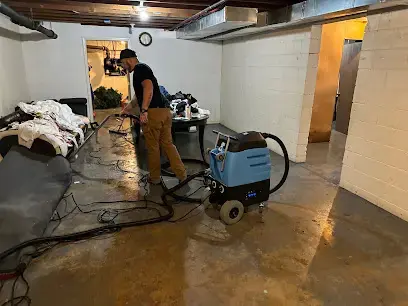
What to do right now about water extraction and removal in Grand Rapids
Extraction is the first physical step after a leak, a flood or a backup. In Grand Rapids it often happens in basements near the Grand River valley, where the April 2013 crest and the 1904 flood show how far water can travel. Every minute standing water sits, it wicks farther into materials.
Stop the source
Shut the valve or breaker if it is safe, so water stops spreading.
Move small items
Lift furniture, rugs and boxes onto dry surfaces before the crew starts work.
Photograph the water
Capture the depth, the source and wet belongings for the claim.
Call for extraction
Describe the water color and depth so the right equipment is sent.
How water extraction and removal is handled in Grand Rapids, MI
Assess the water
Depth, source and water category are checked before pumps are placed.
Pump it out
Portable pumps clear deep water, then truck mounted wands work the carpet and pad.
Remove what holds water
Soaked pad, loose debris and toe kicks come out so air can reach the subfloor.
Hand off to drying
Moisture readings set the equipment plan for the structural drying stage.
What does water extraction and removal cost in Grand Rapids, MI?
Extraction alone usually costs $500 to $4,500 or more, depending on water depth, floor area and whether the water is clean or contaminated. Readings and the size of the affected area set the written estimate. Written estimates come from measurements taken on site.
Single wet room
- One room of hard flooring or carpet
- Portable or truck mounted pump
- Readings once water is out
Wet basement slab
- Pump out of the whole slab
- Carpet and pad pulled
- Moisture map of wet rooms
Deep or contaminated water
- Inches of water on the slab
- Protective gear and disposal
- Debris and pad hauled out
Ranges are typical, not a quote. For a planning number on your own loss, run the water damage cost calculator; the on-site walkthrough sets the real scope.
What the crew removes
- Standing water from slabs, hard floors and carpeted rooms using portable and truck mounted units
- Saturated carpet pad and loose debris that would keep holding moisture
- Surface water left in low spots, stairwells and window wells
Water is pulled before anything is torn out, which keeps more of the floor and trim in place. Technicians then take readings on walls, subfloors and baseboards to see where moisture traveled. Wet framing and drywall go on to structural drying.
When the water is not clean
If the water came from a drain or the sewer, the job changes. Crews set containment, wear protective gear and remove porous goods, and the work follows the process on the sewage backup cleanup page.
After extraction
Extraction does not make a building dry. Air movers and dehumidifiers carry on from there, and the crew logs readings each visit until walls and floors match dry reference points. A flooded basement usually needs several days of this. Moving fast here protects more of what the owner wants to keep.
How water extraction and removal gets done to standard
Rapid local response
Wyoming water damage pros run 24/7 dispatch, and the response team treats standing water as urgent at any hour, holidays included.
IICRC S500 drying standard
The drying team follows IICRC S500, the industry drying standard: moisture mapping first, then structural drying, not just surface drying.
Claim-ready documentation
Each loss gets a moisture map, daily readings and timestamped photos, the file an adjuster reads before deciding a claim.
West Michigan water know-how
Block basements, sump pits, floor drains, frozen pipes and ice dams: local water damage experts know how water moves through a Kent County house.
Water extraction and removal across Grand Rapids and nearby communities
Extraction crews reach Heritage Hill, Eastown, Alger Heights, Creston and the Westside, along with ZIP codes 49503, 49504 and 49506 and the rest of Kent County, including streets on the valley floor and the bluffs above it.
The same service nearby: water extraction and removal in Wyoming, East Grand Rapids, Walker.
Related water damage services in Grand Rapids
Water Extraction and Removal questions in Grand Rapids, MI
Q01How soon should extraction start?
As early as possible. Water moves into drywall, pad and framing steadily, so the earlier it is pumped, the less material has to be removed.
Q02Can carpet be saved after extraction?
Clean water caught early often leaves carpet salvageable, while the pad is usually replaced. Gray or black water means carpet and pad go.
Q03What equipment pulls the water out?
Portable pumps handle deep water, and truck mounted extractors with wands pull what is left from carpet, pad and hard floors.
Q04Does extraction include drying?
Extraction removes the water. Drying equipment, readings and follow up visits belong to structural drying, which is scoped separately on the same job.
Q05Why does water reach Grand Rapids basements after heavy rain?
Record rain in April 2013 and river flooding in 1904 show the pattern, and the city also says footing drains tied to the sanitary sewer can add water in many areas.
Q06What should be moved before the crew starts?
Electronics, paper, medications and small furniture should go to dry space, but leave heavy items and anything near a possible electrical hazard alone.
Get the water out of the building
Call dispatch, describe the depth and the water color, and a crew is sent with pumps and extractors for the job.
(888) 612-9219Send a pump crew