Structural Drying in Walker, MI
After the water is out, the framing, subfloors and concrete are still wet. Walker crews place air movers and LGR dehumidifiers, adjust them daily and log readings until each material is dry.
(888) 612-9219Book structural drying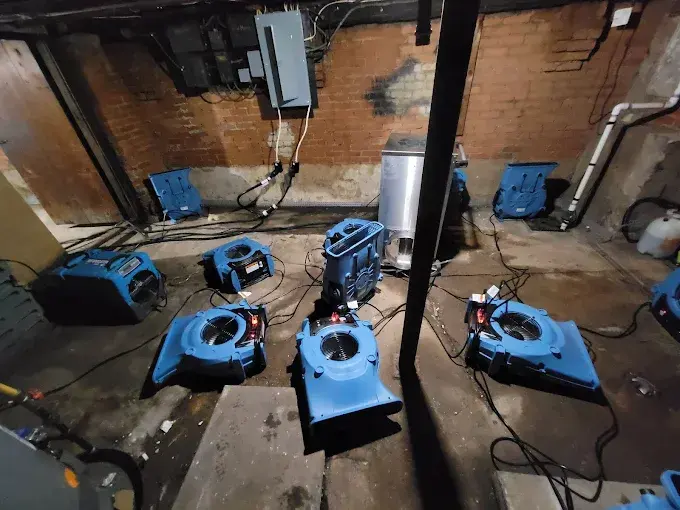
What to do right now about structural drying and dehumidification in Walker
The visible water is only part of a loss. Studs, joists, plaster, concrete and subfloors hold moisture long after the pumps shut off, and that hidden water keeps causing swelling, stains and odor until it is dried out.
Map
A moisture meter and thermal camera show which materials are wet and how deeply.
Place equipment
Air movers and LGR dehumidifiers are set by room size and material type.
Read daily
Moisture is measured every day and the equipment is moved or added to.
Release
Equipment leaves only after readings reach the dry standard for each material.
How structural drying and dehumidification is handled in Walker, MI
Assess
Materials, moisture levels and room conditions are measured and recorded.
Install
Air movers and dehumidifiers go in to push air and pull moisture out.
Monitor
Readings are taken daily, and equipment is moved or added as needed.
Finish
Equipment comes out once every material reaches its dry standard.
What does structural drying and dehumidification cost in Walker, MI?
Class 1 or 2 jobs usually run $1,500 to $3,500, class 3 basements or floors $3,500 to $7,500, and class 4 dense materials $7,500 to $12,000 or more, depending on equipment and days needed.
Class 1 or 2, small area
- A few air movers
- One LGR unit
- Several days of logs
Class 3, basement or floor
- Walls and ceilings wet
- Several LGR units
- Daily adjustments
Class 4, dense materials
- Block, slab, oak, plaster
- Desiccant drying
- Extended monitoring
Ranges are typical, not a quote. For a planning number on your own loss, run the water damage cost calculator; the on-site walkthrough sets the real scope.
How the plan is chosen
The S500 standard sorts losses by how much water the materials absorb and how fast they release it. Dense materials such as concrete and hardwood dry slowly, so they call for more days and sometimes desiccant equipment. Newer subdivisions and homes of any age follow the same rules, but the materials inside decide the timeline.
What the crew does
- Place air movers to push air across wet surfaces
- Run LGR dehumidifiers to pull water out of the air
- Take readings daily and move equipment as the structure dries
Equipment does not run on a fixed schedule. Placement is rechecked each day, because a corner that looked fine yesterday can hold a pocket of moisture today, and units come out only when the readings match the dry standard.
Where drying fits
Drying follows nearly every other water job. See basement flooding cleanup for lower levels, hardwood floor water damage for wood floors, and commercial water damage for business buildings. The tear-out comes first on those jobs, and the drying that follows decides when repairs can start.
How structural drying and dehumidification gets done to standard
Rapid local response
Wyoming water damage pros run 24/7 dispatch, and the response team treats standing water as urgent at any hour, holidays included.
IICRC S500 drying standard
The drying team follows IICRC S500, the industry drying standard: moisture mapping first, then structural drying, not just surface drying.
Claim-ready documentation
Each loss gets a moisture map, daily readings and timestamped photos, the file an adjuster reads before deciding a claim.
West Michigan water know-how
Block basements, sump pits, floor drains, frozen pipes and ice dams: local water damage experts know how water moves through a Kent County house.
Structural drying and dehumidification across Walker and nearby communities
Structural drying runs across Walker ZIP codes 49534 and 49544, including Standale, Alpine Estates, English Hills, Falcon Pointe, Huntington Ridge, Jason Ridge, Meadow Springs and Waterford Village, plus commercial buildings along Alpine Avenue and Remembrance Road.
The same service nearby: structural drying and dehumidification in Wyoming, Grand Rapids, Grandville.
Related water damage services in Walker
Structural Drying and Dehumidification questions in Walker, MI
Q01How is structural drying different from extraction?
Extraction removes liquid water. Drying removes the moisture absorbed by materials.
Q02Why does it take several days?
Wood, concrete and plaster release water slowly, so readings drive the schedule.
Q03Why not just use fans?
Fans move air but do not remove moisture from it, so LGR dehumidifiers are needed.
Q04Does drying prevent mold?
Dry materials resist growth, which is why drying is measured rather than guessed.
Q05What does it cost?
Cost follows the class of water damage and the size of the area.
Q06What are the water damage classes?
Class 1 involves little wet material, class 2 more carpet and wall, class 3 water that soaked a lot from above, and class 4 deep moisture in dense materials.
Q07Can drying start before the tear-out finishes?
Equipment usually goes in after wet materials are removed, so it works on what can dry rather than what will be thrown away.
Drying in Walker needs readings
Call with what flooded and how long ago, and dispatch sends air movers and dehumidifiers sized for the structure.
(888) 612-9219Book drying equipment