Structural Drying and Dehumidification in East Grand Rapids, MI
Older basements and crawl spaces hold moisture in framing, subfloors and block walls long after the water is gone. The crew dries each material to a measured reference with LGR dehumidifiers and air movers.
(888) 612-9219Plan structural drying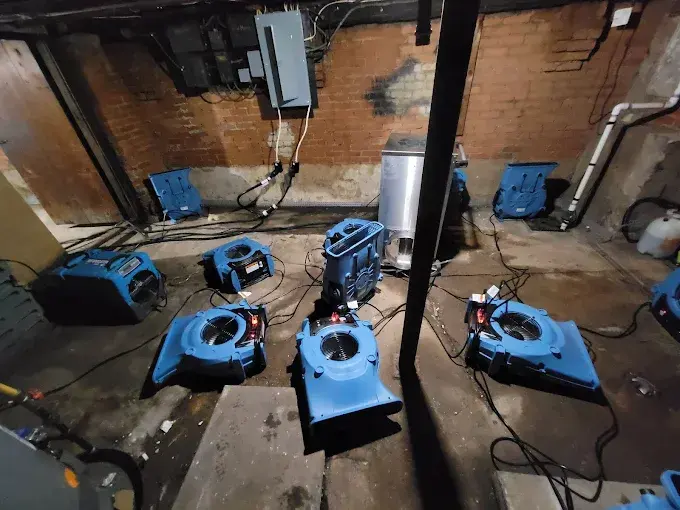
What to do right now about structural drying and dehumidification in East Grand Rapids
East Grand Rapids homes average a 1946 build year, and the city reports that about 32 percent were built in 1939 or earlier and about 48 percent from 1940 to 1959. Older basements and crawl spaces in homes like that can hold water in framing, subfloors and masonry long after the surface looks dry.
Stop the water
Shut off the source and finish extraction before drying equipment is set.
Keep the equipment on
Leave dehumidifiers and air movers running without turning them off or moving them.
Keep doors and windows shut
Closed rooms let dehumidifiers work on the damp air inside.
Let the crew take readings
Daily visits record each wet material until it reaches its dry reference.
How structural drying and dehumidification is handled in East Grand Rapids, MI
Map the moisture
A meter and thermal camera mark every wet material and its starting reading.
Place the equipment
LGR dehumidifiers and air movers are sized to the room and aimed at wet surfaces.
Adjust each day
Readings are logged and equipment is moved or added as materials dry.
Prove the dry
Equipment stays until each material matches its dry reference.
What does structural drying and dehumidification cost in East Grand Rapids, MI?
Drying cost follows the drying class and the number of wet materials, since heavy materials like block and oak need more equipment for longer. The ranges below show typical small, mid and dense jobs.
Small, light moisture
- A few air movers set
- One LGR dehumidifier running
- Short run with daily readings logged
Basement or full floor
- Walls and ceilings wet through
- Several LGR dehumidifiers
- Equipment adjusted each day
Dense materials
- Block, slab, oak and plaster
- Desiccant drying added for depth
- Extended monitoring with logs
Ranges are typical, not a quote. For a planning number on your own loss, run the water damage cost calculator; the on-site walkthrough sets the real scope.
Why surfaces lie
A wall can feel dry while the wood inside still reads wet. Moisture meters and a thermal camera show what hands cannot, and the readings set where equipment goes and how long it runs. Skipping that check is how a house looks fixed and stays damp.
Drying classes in plain terms
- Small losses with light moisture in a few materials
- Floor-wide or basement losses with wet walls and ceilings
- Dense materials such as block, slab and oak that release water slowly
The IICRC S500 classes rank how much and how deeply water has soaked, and the class sets how much equipment the drying plan needs.
Equipment placement and daily checks
LGR dehumidifiers pull moisture from the air while air movers sweep it off wet surfaces, and the crew adjusts both each day as readings drop. Equipment comes out only when every material matches its dry reference. For a basement flood this follows basement flooding cleanup, and for a pipe loss it follows burst pipe water damage.
How structural drying and dehumidification gets done to standard
Rapid local response
Wyoming water damage pros run 24/7 dispatch, and the response team treats standing water as urgent at any hour, holidays included.
IICRC S500 drying standard
The drying team follows IICRC S500, the industry drying standard: moisture mapping first, then structural drying, not just surface drying.
Claim-ready documentation
Each loss gets a moisture map, daily readings and timestamped photos, the file an adjuster reads before deciding a claim.
West Michigan water know-how
Block basements, sump pits, floor drains, frozen pipes and ice dams: local water damage experts know how water moves through a Kent County house.
Structural drying and dehumidification across East Grand Rapids and nearby communities
Structural drying is set up across East Grand Rapids, from older homes near Reeds Lake and Fisk Lake to buildings around Gaslight Village and Wealthy Street, in ZIP codes 49506 and 49546 handled by one dispatch.
The same service nearby: structural drying and dehumidification in Wyoming, Grand Rapids, Kentwood.
Related water damage services in East Grand Rapids
Structural Drying and Dehumidification questions in East Grand Rapids, MI
Q01How long does structural drying take?
It depends on the class and the materials. Readings, not a calendar, decide when equipment comes out.
Q02Why are dehumidifiers and air movers both needed?
Air movers lift moisture off wet surfaces and dehumidifiers remove it from the air. Using only one leaves the room humid or leaves the wet material still holding water.
Q03Is a house dry when the surface feels dry?
Not always. Framing, subfloor and masonry can stay wet inside, which is why meters read the material and the crew compares each number to a dry reference.
Q04Why do older crawl spaces and basements dry slowly?
Masonry, old framing and cool, damp air hold water longer, so drying is planned for more days and more dehumidification than a surface-only loss.
Q05Is drying equipment loud and power hungry?
Dehumidifiers and air movers are loud and draw power, so the crew plans circuits to avoid tripped breakers. Equipment runs around the clock so the drying does not slow.
Q06Does insurance cover drying equipment days?
Equipment days and readings are usually part of a water damage claim, and the daily logs show the adjuster why each unit stayed in place.
Hidden moisture needs a drying plan
Water left inside framing and block keeps damaging materials after the surface looks dry. Call dispatch to set equipment and start readings.
(888) 612-9219Plan the drying