Structural Drying and Dehumidification in Kentwood, MI
After water is removed, framing, subfloor and drywall still hold moisture. The Kentwood crew sets dehumidifiers and air movers by drying class and checks readings daily until the structure is dry.
(888) 612-9219Set up structural drying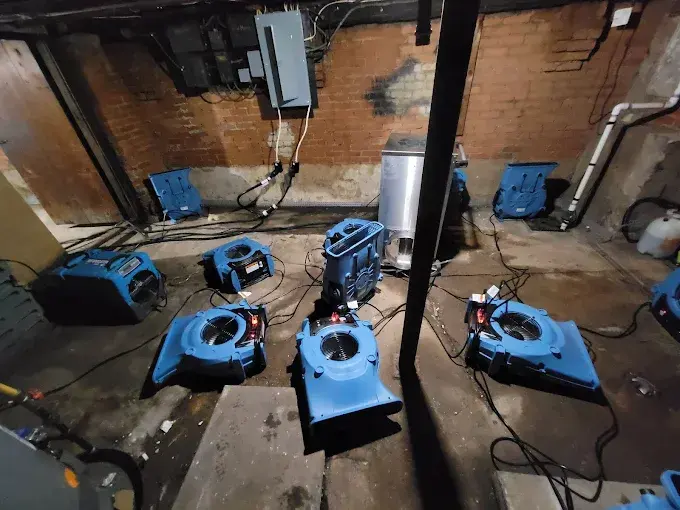
What to do right now about structural drying and dehumidification in Kentwood
Water that has been extracted still leaves moisture inside framing, subfloor and wall cavities, and that moisture will not leave by itself fast enough. Structural drying is the controlled process of pulling it out with dehumidifiers and air movers. The IICRC S500 standard sorts losses into classes by how much water the materials absorbed, and that class sets the equipment plan.
Classify the loss
The crew rates the water and materials to set the drying class.
Place the equipment
LGR dehumidifiers and air movers go in by room and wall.
Close up and run
The work area is closed so equipment dries the structure, not outside air.
Read and adjust
Readings every visit decide when units move, change or leave.
How structural drying and dehumidification is handled in Kentwood, MI
Classify the loss
Water category and absorption of the materials set the drying class.
Place and start
Dehumidifiers and air movers are placed and the room is sealed.
Monitor daily
Meters and hygrometers record each visit's readings.
Adjust and verify
Units move or leave as readings reach the dry standard.
What does structural drying and dehumidification cost in Kentwood, MI?
Structural drying in Kentwood usually costs $1,500 to $12,000 or more. The drying class, the number of rooms and the density of the materials, such as block, oak or plaster, decide where a job lands.
Class 1 or 2, small area
- A few air movers
- One LGR dehumidifier unit
- Three days of logs
Class 3, basement or floor
- Walls and ceilings wet
- Several LGR units running
- Daily equipment adjustments
Class 4, dense materials
- Block, slab, oak and plaster
- Desiccant drying when needed
- Extended monitoring visits
Ranges are typical, not a quote. For a planning number on your own loss, run the water damage cost calculator; the on-site walkthrough sets the real scope.
Matching equipment to the class
- Class 1 and 2 losses involve limited absorption and are dried with a few air movers and a dehumidifier.
- Class 3 means walls and ceilings are wet, so more LGR units and daily adjustments are used.
- Class 4 covers dense materials such as block, slab, oak and plaster, which may need desiccant drying.
Placement matters as much as quantity. Air movers are angled to sweep wall bases and floors, dehumidifiers sit where they can pull the most humid air, and technicians move or add units as readings change. Concrete and block basements are a common example, covered under basement flooding cleanup.
Proving the structure is dry
Drying is finished when materials match the readings of unaffected reference areas, not when a set number of days passes. Moisture meters, thermal imaging and hygrometers record temperature, humidity and wood or drywall content each visit, and the logs go into the claim file.
Common reasons drying runs long
Hidden wet insulation, closed cavities and wet flooring layers slow drying, as does a house with doors and windows left open. The crew checks wall bays, opens small sections where readings stay high and keeps the work area closed so equipment is not fighting outside air. Sudden pipe losses are covered under burst pipe water damage.
How structural drying and dehumidification gets done to standard
Rapid local response
Wyoming water damage pros run 24/7 dispatch, and the response team treats standing water as urgent at any hour, holidays included.
IICRC S500 drying standard
The drying team follows IICRC S500, the industry drying standard: moisture mapping first, then structural drying, not just surface drying.
Claim-ready documentation
Each loss gets a moisture map, daily readings and timestamped photos, the file an adjuster reads before deciding a claim.
West Michigan water know-how
Block basements, sump pits, floor drains, frozen pipes and ice dams: local water damage experts know how water moves through a Kent County house.
Structural drying and dehumidification across Kentwood and nearby communities
Structural drying covers homes and large commercial buildings across Kentwood, from the Plaster Creek area and the 28th Street corridor to the east side near Madison Avenue and ZIP codes 49512 and 49548.
The same service nearby: structural drying and dehumidification in Wyoming, East Grand Rapids, Grand Rapids.
Related water damage services in Kentwood
Structural Drying and Dehumidification questions in Kentwood, MI
Q01How long does structural drying take?
It depends on the materials, the amount of water and the weather. Dense materials such as block or oak take longer, which is why readings rather than a calendar decide.
Q02What is an LGR dehumidifier?
LGR stands for low grain refrigerant. It pulls moisture from air even when humidity is already low, which makes it better for drying structures than a household dehumidifier.
Q03Why are air movers placed along walls?
Moving air across wall bases and floors lifts moisture from the surface so the dehumidifier can remove it. Angling the units keeps air circulating without spreading dust.
Q04Can equipment be turned off at night?
No. Equipment works around the clock to hold humidity down, and shutting it off lets moisture settle back into the materials.
Q05Who verifies the structure is dry?
Technicians compare readings with unaffected areas of the same materials. When the numbers match, equipment is removed and the logs are handed over for the claim.
Q06Does structural drying raise the power bill?
Yes, equipment draws electricity for the duration of the job. Owners can note the added use, and some policies reimburse it, so mention it to the adjuster.
Finish drying the structure
Equipment sized to the drying class and checked daily is what separates a dry structure from a damp one. Call to set it up.
(888) 612-9219Kentwood drying help