Hardwood Floor Water Damage in East Grand Rapids, MI
Water under or over hardwood makes boards swell, cup and sometimes buckle. The crew reads the wood with a meter, dries it in place with mats where it can be saved and removes boards that cannot recover.
(888) 612-9219Get hardwood floor help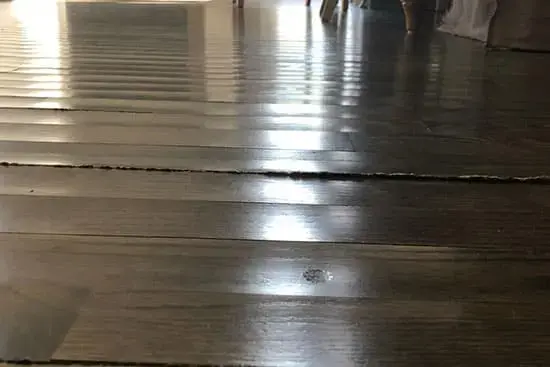
What to do right now about hardwood floor water damage in East Grand Rapids
Floors in older East Grand Rapids homes are checked for cupping and dried in place where they can be saved. Because the average home was built in 1946, saving older boards is often worth the effort.
Stop the source
Close the valve or stop the leak feeding the floor.
Blot, do not scrub
Soak up surface water with towels and keep furniture off the boards.
Hold off on heat
Avoid heaters and floor products until the boards are measured.
Call for a floor check
Describe the room and the water source.
How hardwood floor water damage is handled in East Grand Rapids, MI
Extract and measure
Water is pulled from the surface and a meter reads boards and subfloor.
Set the mats
Mats go down while air movers and dehumidifiers run.
Track the wood
Daily readings show whether cupping eases or boards must come out.
Release the floor
Boards are sanded or replaced only after readings reach the dry reference.
What does hardwood floor water damage cost in East Grand Rapids, MI?
Hardwood cost depends on how many rooms are wet, how long the boards sat in water and whether they can dry in place. Boards that buckle or soak in contaminated water move a job into the highest card.
One room, caught early
- Boards extracted
- Mats and air movers
- Daily wood readings
Several rooms
- Mats and air movers
- Subfloor dried too
- Dehumidifiers
Buckled or contaminated
- Boards removed
- Subfloor dried first
- Extended monitoring
Ranges are typical, not a quote. For a planning number on your own loss, run the water damage cost calculator; the on-site walkthrough sets the real scope.
How wood reacts to water
Boards take on moisture from below and above, swelling at the edges first, which causes cupping. If water stays, the boards can crown or lift off the subfloor. Fast drying keeps the movement small and often lets the wood settle back.
What the crew does
- Extract water from the surface and the seams
- Place drying mats and run air movers and dehumidifiers
- Read the boards and subfloor each day
Mats pull moisture out of the boards while dehumidifiers keep the room dry. If water came from a supply pipe, the loss also follows burst pipe water damage, and a leaking appliance follows appliance and supply hose leaks.
When boards must come out
Boards that buckle, split or soak in contaminated water usually cannot be saved. They are removed in sections so the subfloor can dry, and replacement waits until readings reach the dry reference. Finishing a floor too soon traps moisture and brings the cupping back.
How hardwood floor water damage gets done to standard
Rapid local response
Wyoming water damage pros run 24/7 dispatch, and the response team treats standing water as urgent at any hour, holidays included.
IICRC S500 drying standard
The drying team follows IICRC S500, the industry drying standard: moisture mapping first, then structural drying, not just surface drying.
Claim-ready documentation
Each loss gets a moisture map, daily readings and timestamped photos, the file an adjuster reads before deciding a claim.
West Michigan water know-how
Block basements, sump pits, floor drains, frozen pipes and ice dams: local water damage experts know how water moves through a Kent County house.
Hardwood floor water damage across East Grand Rapids and nearby communities
Hardwood floor calls come from across East Grand Rapids, including older houses near Reeds Lake, Fisk Lake, Lake Drive and Lovett Avenue, with ZIP codes 49506 and 49546 handled by the same dispatch.
The same service nearby: hardwood floor water damage in Wyoming, Grand Rapids, Kentwood.
Related water damage services in East Grand Rapids
Hardwood Floor Water Damage questions in East Grand Rapids, MI
Q01Can cupped hardwood go flat again?
Often yes, when it is dried promptly. Cupping eases as the moisture leaves the boards, and refinishing is held until readings are stable.
Q02How long should hardwood dry before refinishing?
Until the wood moisture readings match a dry reference for that floor, which can be longer than the surface suggests. Sanding or sealing early traps water and can bring back cupping.
Q03Does water under the floor damage hardwood too?
Yes. Moisture from a crawl space or slab can swell boards from below, so the subfloor is measured and dried along with the wood.
Q04Does insurance cover hardwood water damage?
Sudden leaks are commonly covered, and the policy may cover board replacement if drying fails. Photos of the cupping and the moisture logs show what happened and what was tried.
Q05Is it worth saving old hardwood?
Often, because replacing a whole floor costs more than drying it and matching older boards is difficult. The meter readings show early whether drying is working.
Wet hardwood needs drying now
Boards keep swelling while water stays in them, and the longer it stays the less can be saved. Call dispatch to plan mats and daily readings.
(888) 612-9219Start floor drying