Hardwood Floor Water Damage in Grand Rapids, MI
Grand Rapids is nicknamed Furniture City, and wood floors there cup and stain fast when water sits. Crews extract the water and dry boards and subfloor before they buckle, using mats and dehumidifiers.
(888) 612-9219Call about wet hardwood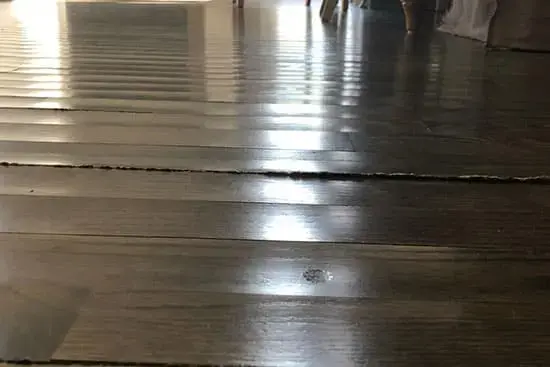
What to do right now about hardwood floor water damage in Grand Rapids
Hardwood absorbs water through the seams and from below, and it swells in the first days. Cupping, where the board edges rise, is the first sign, and buckling can follow. The sooner water is extracted and drying starts, the more of the floor can usually stay.
Lift the water
Soak up what you can with towels and a wet vacuum.
Move furniture
Raise the legs onto foil or wood blocks to protect the finish.
Open the room
Run fans and keep the heat on, but skip heat guns on wood.
Photograph the boards
Record cupping, stains and the source of the water.
How hardwood floor water damage is handled in Grand Rapids, MI
Extract
Surface water and seam water are pulled first, before any mats go down.
Meter
Moisture readings in boards and subfloor set the plan for equipment.
Dry
Mats, air movers and dehumidifiers run in tuned stages with daily checks.
Decide
Readings show whether boards stay or come out.
What does hardwood floor water damage cost in Grand Rapids, MI?
Hardwood water damage usually costs $1,500 to $9,000 or more. A single room caught early costs the least, while buckled floors, several rooms or contaminated water push the cost up. Readings set the written estimate.
One room, caught early
- Water extraction
- Drying mats set
- Daily wood readings
Several rooms
- Mats and air from below
- Subfloor drying
- Dehumidification
Buckled or soiled
- Boards removed
- Subfloor dried
- Extended monitoring
Ranges are typical, not a quote. For a planning number on your own loss, run the water damage cost calculator; the on-site walkthrough sets the real scope.
How wood is dried
- Water extracted from the surface and the seams
- Drying mats pull moisture up through the boards
- Air movers and dehumidifiers lower humidity in the room
Readings are taken in several boards and in the subfloor, since wood can feel dry while the layer below stays wet. Mats and equipment adjust until the numbers settle near the dry reference points. For the broader method, see structural drying.
When boards must come out
Boards that buckle, split or took contaminated water usually cannot be saved. Removal also opens the subfloor so it can dry before new flooring is laid. Sewage cases follow the sewage backup cleanup rules.
Finishing and refinishing
Refinishing belongs to a flooring contractor after the wood and subfloor are dry. Sanding too soon seals moisture in, which is why readings and a dry sign off come first.
How hardwood floor water damage gets done to standard
Rapid local response
Wyoming water damage pros run 24/7 dispatch, and the response team treats standing water as urgent at any hour, holidays included.
IICRC S500 drying standard
The drying team follows IICRC S500, the industry drying standard: moisture mapping first, then structural drying, not just surface drying.
Claim-ready documentation
Each loss gets a moisture map, daily readings and timestamped photos, the file an adjuster reads before deciding a claim.
West Michigan water know-how
Block basements, sump pits, floor drains, frozen pipes and ice dams: local water damage experts know how water moves through a Kent County house.
Hardwood floor water damage across Grand Rapids and nearby communities
Wood floor calls come from Heritage Hill, Eastown, Alger Heights, East Hills and Fulton Heights, across ZIP codes 49503, 49506 and 49507 and the rest of Kent County, in every kind of home.
The same service nearby: hardwood floor water damage in Wyoming, East Grand Rapids, Walker.
Related water damage services in Grand Rapids
Hardwood Floor Water Damage questions in Grand Rapids, MI
Q01How fast does hardwood cup?
Often within days if water stays on or under it. Early extraction and mats can slow or stop the cupping before it sets.
Q02Can a buckled floor be saved?
Rarely. Boards that have lifted off the subfloor usually need replacement once the area is dry, though minor cupping can sometimes be sanded out.
Q03Is drying under the floor needed?
Yes. Water reaches the subfloor through the seams, so the layer below is checked and dried too, often from underneath with mats.
Q04Will insurance cover the floor?
Sudden leaks are commonly covered. Photos of the water, the boards and the readings help the adjuster.
Q05Does cupping always mean the floor is ruined?
No. Many cupped floors flatten again after proper drying, so refinishing is only judged once readings are dry and the boards have settled.
Save the boards before they buckle
Call dispatch, describe the room and how long the water sat, and a crew is sent with extractors, mats and meters.
(888) 612-9219Send a floor drying crew