Appliance Leak Water Damage in Kentwood, MI
Washer hoses, dishwasher supplies and refrigerator ice-maker pipes leak slowly or burst suddenly. The Kentwood crew finds the wet floor, cabinet and subfloor areas and dries them completely.
(888) 612-9219Report an appliance leak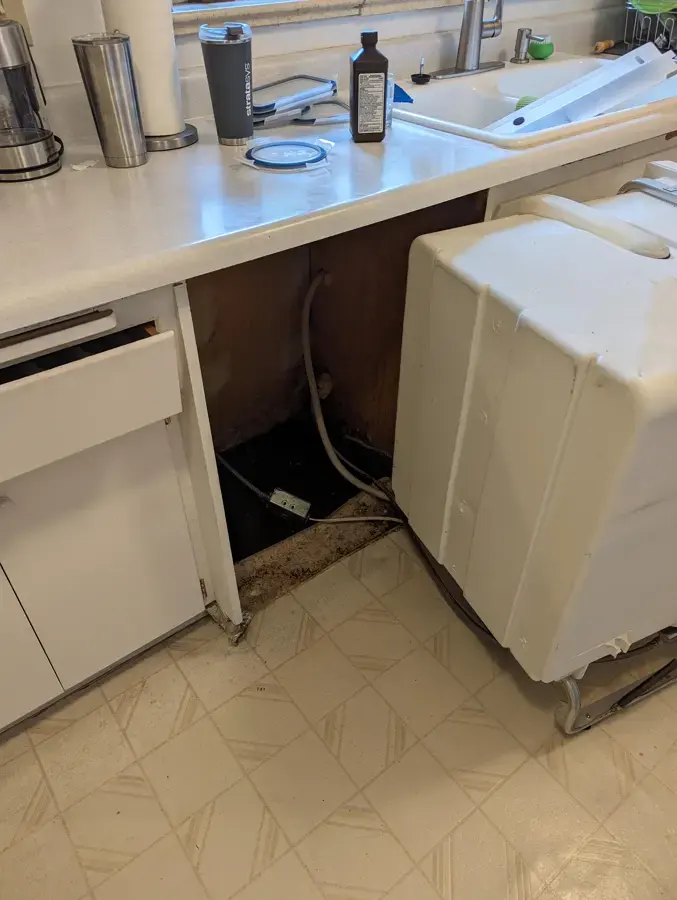
What to do right now about appliance and supply hose leaks in Kentwood
Appliance leaks are quiet. A cracked hose or a failed seal can drip for weeks before a stain or a soft floor gives it away. Kentwood counted 21,337 households in 2020, and 29.9 percent were people living alone, so a leak can run unseen while nobody is home.
Shut the supply
Close the valve behind the appliance or the home's main shutoff.
Lift belongings
Items on the floor and in lower cabinets go to dry shelves.
Extract and probe
Water is removed, and meters probe floors, toe kicks and walls.
Open and dry
Wet toe kicks come off and equipment dries the cabinet base.
How appliance and supply hose leaks is handled in Kentwood, MI
Stop the leak
The supply is shut off and the failed part is photographed.
Remove standing water
Wet vacuums and extractors clear the floor.
Probe the hidden spots
Meters check under flooring, in cabinets and behind walls.
Dry the area
Equipment runs until every reading reaches target.
What does appliance and supply hose leaks cost in Kentwood, MI?
Appliance and supply hose leak cleanup in Kentwood usually costs $700 to $7,000 or more. A leak caught fast stays small, while a slow leak that soaked flooring and cabinet bases for weeks costs the most.
Caught early
- One floor section dried
- Pump and dry
- Readings until dry
Cabinets and subfloor
- Toe kicks off
- Subfloor dried
- Ceiling below probed
Leak ran for weeks
- Flooring pulled
- Cabinet base cut
- Long dry-out
Ranges are typical, not a quote. For a planning number on your own loss, run the water damage cost calculator; the on-site walkthrough sets the real scope.
Where the water hides
- Under vinyl, laminate and tile, where water spreads across the subfloor.
- Inside cabinet bases and toe kicks that wick water upward.
- Behind the appliance on the wall, and in the ceiling below.
A slow leak is often a clean or gray water problem that has aged into a bigger one, because wet materials stay damp and start to deteriorate. Probing and readings show how far the moisture reaches before anything is cut. Hardwood floors are covered in hardwood floor water damage.
Fix, then dry
An appliance repair person or plumber replaces the hose, valve or seal, while the crew handles water extraction and drying of the floor and cabinets. Pull the unit away from the wall only if the floor is safe, and photograph the hose and fitting that failed before they are thrown away.
Documenting a supply hose leak
Insurers often ask when the leak started, so notes on when the stain or smell appeared help. Dated photos, readings and the failed part show whether the loss was sudden.
How appliance and supply hose leaks gets done to standard
Rapid local response
Wyoming water damage pros run 24/7 dispatch, and the response team treats standing water as urgent at any hour, holidays included.
IICRC S500 drying standard
The drying team follows IICRC S500, the industry drying standard: moisture mapping first, then structural drying, not just surface drying.
Claim-ready documentation
Each loss gets a moisture map, daily readings and timestamped photos, the file an adjuster reads before deciding a claim.
West Michigan water know-how
Block basements, sump pits, floor drains, frozen pipes and ice dams: local water damage experts know how water moves through a Kent County house.
Appliance and supply hose leaks across Kentwood and nearby communities
Appliance leak calls come from houses, apartments and condos across Kentwood, including the 28th Street area, the east side near Division Avenue, the west side near Breton Road and ZIP codes 49508 and 49512.
The same service nearby: appliance and supply hose leaks in Wyoming, East Grand Rapids, Grand Rapids.
Related water damage services in Kentwood
Appliance and Supply Hose Leaks questions in Kentwood, MI
Q01What are the most common appliance leaks?
Washer supply hoses, dishwasher connections and refrigerator ice-maker pipes are the usual sources, along with overflowing drain pans and failed door seals.
Q02Can slow leaks cause serious damage?
Yes. Repeated wetting can soften subfloor and cabinet bases and stain ceilings below long before anyone sees water on the floor.
Q03Does the cabinet base have to come out?
Not always. Toe kicks are usually removed to let air reach the base, and the cabinet stays if readings show it can dry in place.
Q04Who pays for an appliance leak?
Homeowner policies often cover sudden appliance leaks, though the appliance itself is usually excluded. Renters should report the leak to the property manager, since the building's policy may apply.
Q05Should the appliance be moved?
Only if the floor is dry enough to walk on and the unit is unplugged. Otherwise the crew moves it carefully to reach the wet flooring beneath.
Dry the floor and cabinets
Catching the leak early keeps repairs small. Call to talk through the wet floor and what the crew will check.
(888) 612-9219Call about the appliance