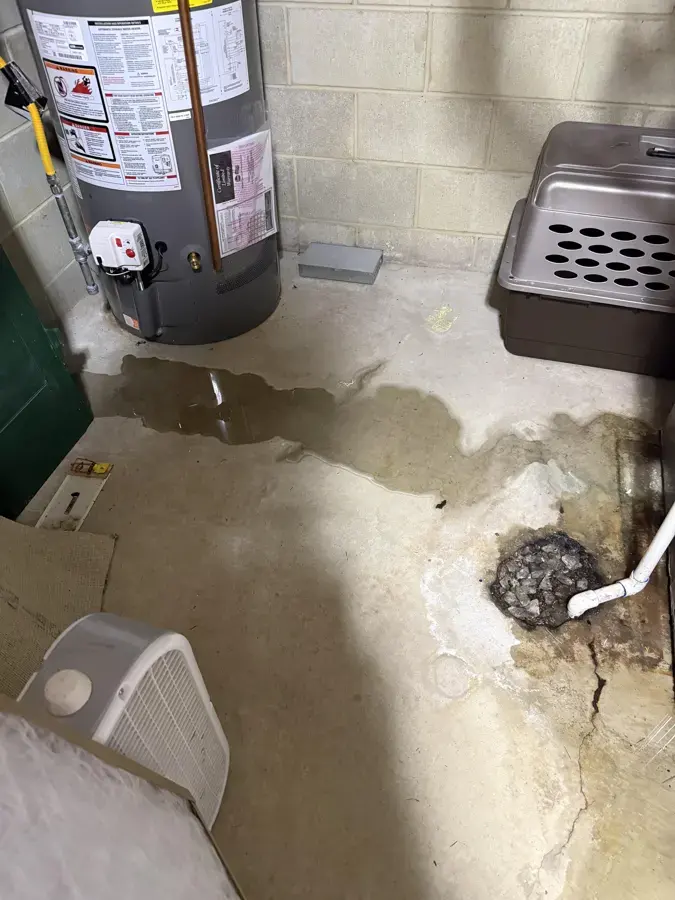
A water heater tank usually fails with little warning, and a utility room in a basement is where it often happens. The water spreads across the slab, then into carpet, drywall and anything stored nearby. In Grand Rapids the repair is not only a plumbing job, because the city requires a permit for work on a water heater.
Key takeaways
- Grand Rapids requires a plumbing permit for work beyond replacing a faucet, sink, toilet or similar fixture, and that includes work on a water heater.
- A city mechanical permit covers changes or updates to water heaters, furnaces and boilers.
- Homeowners may do plumbing work in their own home with a permit, while landlords need a plumbing contractor.
- Extraction comes before the new tank, since standing water spreads while the replacement is arranged.
- A leaking tank is replaced, not patched, and the wet floor and walls need to be dried.
How a tank failure floods a basement
A full tank holds enough water to cover a utility room floor and reach the finished space next to it. Seams corrode, fittings loosen and relief valves drip, and a small leak can become a large one.
Basement floors usually slope toward a drain or a low spot, so water often runs away from the tank before anyone sees it.
- Rust at the base of the tank points to a leak behind the jacket.
- A relief valve that drips often means the tank or its pressure is stressed.
- A wet floor around the tank, even a small one, is a reason to act.
- Warm, damp air in a closed utility room is another early sign.
Signs a tank is close to failing
Tanks rarely fail without hints. A tank that shows several of these signs is worth a plumber's visit before it becomes a flooded basement.
A planned replacement also lets the permit and the install happen on a normal schedule, not an emergency one.
- Rust colored water from the hot tap.
- Pooled water or damp spots around the base.
- Popping or rumbling sounds from the tank when it heats.
- A relief valve that drips or a pipe that sweats heavily.
- A tank old enough that the owner cannot say when it was installed.
The permits Grand Rapids requires
The city says a plumbing permit is needed for work beyond replacing a faucet, sink, toilet or similar fixture. Water heater work is included.
A mechanical permit also covers changes or updates to water heaters, furnaces and boilers.
Plumbing and mechanical permits
A replacement tank means water and gas or electrical connections are changed, and the city treats that as permitted work. The cleanup and the replacement should be planned together.
- Ask the installer whether the permit has been pulled before the old tank comes out.
- Keep the permit record, since it can matter in a later home sale.
Homeowners and landlords
Homeowners may do plumbing work in their own home with a permit. Landlords need a plumbing contractor for the work.
- A tenant should report the leak to the landlord right away.
- A landlord should arrange the permitted repair and the cleanup.
Why extraction comes before replacement
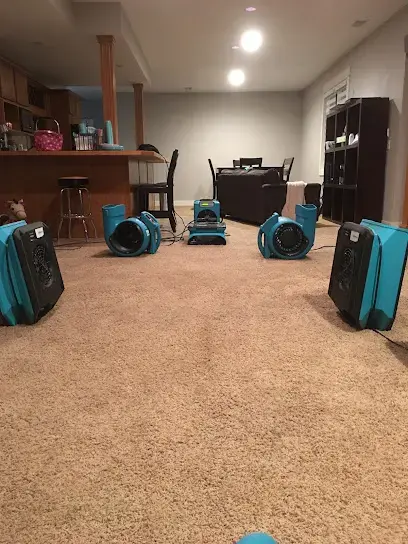
A new tank cannot go in while the floor is under water, and waiting for the installer gives the leak time to spread. A water extraction crew can start before the plumber is on the job.
Pulling water off the slab and out of carpet early keeps wet materials from soaking into walls. It also gives the plumber a dry, safe place to work.
- Shut off the water supply to the tank and the power or gas, if it is safe to reach.
- Photograph the tank, the leak and the wet area.
- Move boxes and stored items off the floor.
- Do not run a wet vacuum from an outlet near standing water.
Wyoming basements show the same pattern
Wyoming homes are mostly 1950s to 1970s houses on full or partial basements with block foundation walls, and utility rooms often sit in a corner of that space. A tank failure there sends water to the slab and the base of the block.
The water heater leak cleanup in Wyoming follows the same order as in Grand Rapids: extract, remove what cannot be dried, and dry the structure.
- Block walls hold water, so the base of the wall is checked and dried.
- Finished space next to the utility room is checked for wet carpet and drywall.
- The replacement tank is permitted under the rules of the city where the house sits.
What the cleanup costs
A water heater leak cleanup is priced by how far the water went. A utility room only commonly runs $800 to $2,000.
When the water reaches finished space, the range is $2,000 to $4,000, and a tank that ran for hours into a large basement area can reach $4,000 to $6,000+.
- Extraction from the slab and a short drying period for a utility room.
- Carpet extracted or pad removed and drywall checked and cut for finished space.
- Flooring removal and extended drying when the leak ran long.
After the tank is replaced
A permitted install and a dry floor are the two things to confirm before the job is closed. The Grand Rapids service area lists the neighborhoods and ZIP codes covered by this work.
- Ask for the moisture readings that show the floor and walls are dry.
- Check that the drain pan and relief pipe are in place.
- Keep the permit and the cleanup records with the insurance claim.
Documenting the loss for the insurer
A water heater leak often becomes an insurance claim, and the claim is stronger when the record is clear. The insurer will want to know what failed, when it was found and what was damaged.
Keeping the old tank until the adjuster has seen it, or at least photographing the label and the failure point, helps the claim move.
- Photographs of the tank, the label, the leak point and the wet area.
- Moisture readings from the cleanup team.
- The permit record for the replacement.
- Receipts for cleanup, replacement and any items that were lost.
Questions
Does a Grand Rapids water heater replacement need a permit?
Yes. The city requires a plumbing permit for work beyond replacing a faucet, sink, toilet or similar fixture, including a water heater, and a mechanical permit covers changes or updates to water heaters.
Can a homeowner replace a water heater alone?
Homeowners may do plumbing work in their own home with a permit. Landlords need a plumbing contractor.
Can a leaking water heater be repaired?
A tank that leaks through the shell is replaced, not patched. A dripping valve or fitting may be repaired, but the cause should be checked.
How fast does a failed tank spread water?
A full tank can cover a utility room floor and reach finished space quickly. The sooner extraction starts, the less carpet and drywall are lost.
Is water heater damage covered by insurance?
Sudden tank failures are often covered, though worn out or neglected equipment may not be. The insurer can confirm what applies.