
A sewage backup in East Grand Rapids often starts underground, in a pipe that was laid decades ago. The city says many homes have old sewer laterals made of materials like clay, which can crack, break and leak easily. When one fails or clogs, the lowest drain in the house takes the overflow.
Key takeaways
- The city warns that old clay laterals can crack, break and leak, and a permit is required for any lateral work.
- Under Public Act 222 of 2001, the owner pays for sewer backup cleanup whether the blockage is in a city main or a private lateral, unless all of the act's liability standards are met.
- The city recommends a sanitary sewer backflow prevention device, and footing drains tied to the lateral must be disconnected before one is installed.
- The city suggests asking an insurer about a sewer backup coverage rider.
- Sewage is Category 3 water, so porous materials it touches are removed and the structure is cleaned and dried.
Why older homes here are exposed
The average year homes were built in East Grand Rapids is 1946, per the city. About 32 percent of homes were built in 1939 or earlier and about 48 percent from 1940 to 1959.
That is an older housing stock, and the pipes under it are older too. The city notes that many homes have old laterals made of clay, a material that can crack as the ground moves.
- A lateral is the pipe that carries a home's sewage from the building to the main in the street.
- Cracks let roots, soil and groundwater in, which can narrow the pipe over time.
- A narrowed or broken lateral can back up even without a storm.
Public Act 222 and who pays
Under Public Act 222 of 2001, the owner pays for sewer backup cleanup whether the blockage is in a city main or a private lateral, unless all of the act's liability standards are met. Those standards are strict, so most owners should expect to start with their own insurance.
What the rule means for a homeowner
The city is not automatically responsible because the blockage sits in a public main. Whether a claim to the city can succeed depends on whether every standard in the act is met.
- Do not assume the city will pay, and do not wait for an answer before cleanup starts.
- Keep photos, dates and the written record of what happened.
- Ask the insurer how a sewer backup claim is handled under the policy.
The coverage rider
The city suggests asking an insurer about a sewer backup coverage rider. Many standard policies do not include backup coverage unless it is added.
- Ask what the rider limit is and whether it covers cleanup, contents and drying.
- Ask whether the deductible differs from the one on the base policy.
Backflow devices, footing drains and permits
The city recommends a sanitary sewer backflow prevention device. It does not require one, and the choice rests with the owner.
Footing drains connected to the sanitary sewer lateral must be disconnected before a device is installed. A permit is required for any lateral work, and if a leak is on the property side of a water service, the owner is responsible and a city permit is required to replace or repair the water service.
- Talk with a plumber about whether a device suits the home's layout.
- Expect a permit for lateral repair or replacement.
- Check whether footing drains tie into the sanitary lateral before choosing a fix.
Questions to ask when the lateral is inspected
The city urges owners to have laterals inspected and repaired by a contractor, with a permit for any lateral work. An inspection is a chance to learn what is underground before a backup happens.
The city also says its storm sewer is separate from the sanitary sewer. Storm flow goes to Reeds Lake, Fisk Lake or the Silver Creek Drain system, so roof and street runoff should not be entering the sanitary pipe, but footing drains tied to the lateral can still add water.
- What material is the lateral, and does the inspection show cracks or sags?
- Do the footing drains connect to the sanitary lateral?
- Would a backflow prevention device make sense for this basement?
- What does the permit for the repair involve, and who pulls it?
What a sewage backup cleanup involves
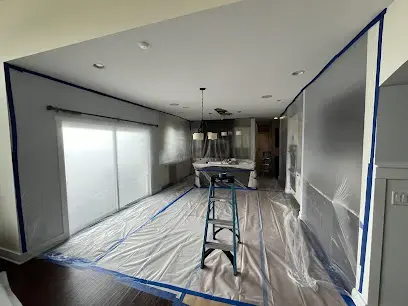
A sewage backup cleanup is a contained job. The team protects clean areas, removes what cannot be cleaned and treats what remains.
Pricing depends on the area affected. A small backup on a bare floor commonly runs $3,000 to $6,000, while a finished basement area can run $6,000 to $11,000 and a whole lower level $11,000 to $18,000+.
- Containment so contamination does not spread through the house.
- Removal of carpet, pad and wet drywall that touched sewage.
- Cleaning and antimicrobial treatment of the slab and walls.
- HEPA air scrubbers while the area is open.
- Documentation of every step for the insurer.
Drying and checking the structure
After removal, the building has to be dried. Structural drying uses dehumidifiers and air movers, with daily moisture readings to show progress.
Older homes often have wood framing and plaster that hold moisture, so the readings matter more than the calendar.
- Equipment is adjusted daily as materials dry.
- A final check confirms the wall and floor readings reach a dry reference.
- Rebuild starts only after those readings are recorded.
Steps to take when a drain backs up
A backup calls for fast decisions, but the right order is simple.
- Stop using sinks, toilets and washers so no more water enters the pipe.
- Keep family and pets out of the affected room.
- Photograph the backup, the damage and anything touched by the water.
- Call the insurer to open a claim and ask about backup coverage.
- Arrange cleanup quickly, since contaminated material should not sit in the house.
- See the East Grand Rapids service area for the neighborhoods covered by this work.
Questions
Who is responsible for a sewer lateral in East Grand Rapids?
The city urges owners to have laterals inspected and repaired, and a permit is required for any lateral work. Under Public Act 222 of 2001, the owner usually pays for backup cleanup.
Does the city pay for sewer backup cleanup?
Only if every liability standard in Public Act 222 of 2001 is met. Otherwise the owner pays, so the homeowner's insurance is usually the first call.
Is a backflow prevention device required?
No. The city recommends one, but it is not required. Footing drains tied to the sanitary lateral must be disconnected before one is installed.
Can a homeowner clean up a sewage backup alone?
A very small backup on a hard floor can be handled with care and protective gear. Anything that reaches carpet, drywall or a finished area is better left to a trained team.
What does a sewer backup rider cover?
It adds coverage for water that backs up through a drain or sewer. Limits and covered items vary, so the policy and the insurer's answer matter.