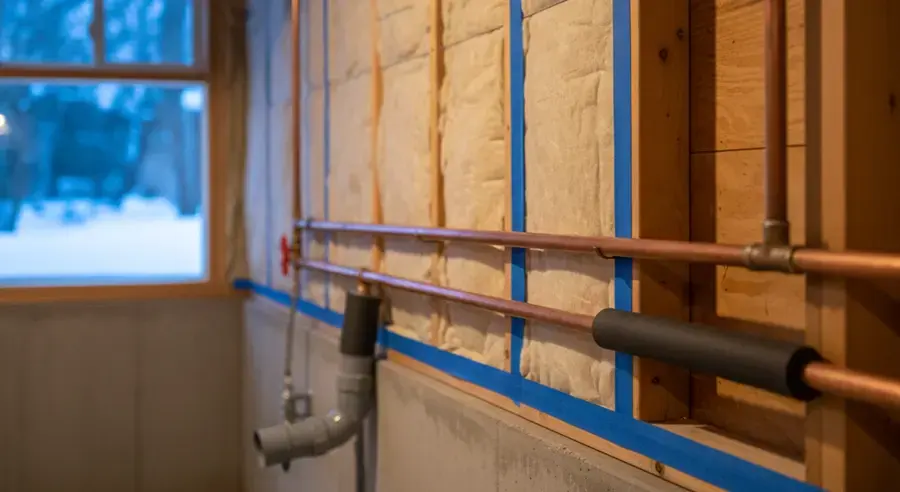
Most Wyoming homes are 1950s to 1970s ranches, bungalows and split-levels, and their water supply is copper with some galvanized pipe in the basement and exterior walls. West Michigan winters are cold enough to test every pipe in the house. In Grand Rapids the temperature dips below 32 degrees on about 138 nights a year, which makes fall the time to get ready.
Key takeaways
- Pipes in exterior walls, unheated spaces and basement corners freeze first.
- The flood often starts at the thaw, when ice that split a pipe melts and water flows.
- Lake effect snow and deep freezes in West Michigan make an unprotected pipe a seasonal risk, not a rare one.
- Insulating exposed pipes, sealing gaps and knowing the main shutoff are the three jobs that matter most.
- After a split, the water has to be stopped, extracted and dried inside the wall and the ceiling below.
Where pipes freeze in a Wyoming house
A pipe freezes when it sits in cold air long enough for the water inside to turn to ice. The ice expands and can split the pipe, though the split often stays closed until the ice melts.
Exterior walls
Supply pipes that run in an outside wall sit close to the cold, with little insulation between them and the weather. A kitchen sink on an outer wall is a common spot.
- Cabinet doors under a sink on an outside wall trap cold air around the pipes.
- Gaps around where pipes enter the wall let in cold air.
Basements and unheated spaces
Many Wyoming homes have a full or partial basement with block foundation walls. Pipes near the top of those walls, in corners and in unheated utility areas, are exposed to cold coming through the block.
- Pipes close to a rim joist or a garage wall are at higher risk.
- A basement window that does not close tightly can chill the pipes near it.
Why the flood starts at the thaw
A frozen pipe is a plug of ice, so water cannot flow through it. Many owners notice only that a faucet runs slowly or not at all.
When the temperature rises, the ice melts and water flows through the split. That water can run inside a wall, soak insulation and drip into the ceiling below before anyone sees a stain.
- A faucet that trickles on a cold morning is a warning sign.
- A sound of running water in a wall after a thaw points to a split pipe.
- A damp wall, bubbling paint or a stained ceiling shows water has already spread.
A fall checklist before the first hard freeze
Most of the work takes an afternoon and costs little next to a flooded wall.
- Disconnect garden hoses and shut off and drain outdoor faucets.
- Insulate pipes in the basement, crawl areas and garage with foam sleeves.
- Seal gaps where pipes enter walls and where cold air leaks around windows.
- Find the main water shutoff and make sure every adult in the house can close it.
- Keep the heat on when the house is empty, with the thermostat set to a safe temperature.
- Open cabinet doors on outside walls on the coldest nights.
- Let a faucet drip slowly when a hard freeze is forecast.
If a pipe has already frozen or split
A frozen pipe that has not split can sometimes be thawed with warm air, but open flames and torches should never be used. If water is already flowing, the first job is to stop it.
- Shut off the main water supply and open faucets to drain the pipes.
- Turn off power to wet areas if water is near outlets or the panel.
- Photograph the damage before anything is moved.
- Call a plumber for the repair and a restoration team for the water.
- Do not wait for the wall to dry on its own, since wet insulation and framing stay wet.
Leaving the house empty in winter
A house left alone is the riskiest case, because nobody is home to notice a faucet that has stopped running. A furnace that fails during a cold snap can let the whole house cool down.
Michigan freeze and thaw cycles make this worse, since a pipe can freeze, thaw and freeze again over a few days.
- Set the thermostat to a safe temperature and do not turn the heat off.
- Ask a neighbor or friend to check the house during a hard freeze.
- Shut off the main supply and drain the pipes for a long absence.
- Check the basement and exterior wall rooms first when coming home to a cold house.
What frozen and burst pipe cleanup involves
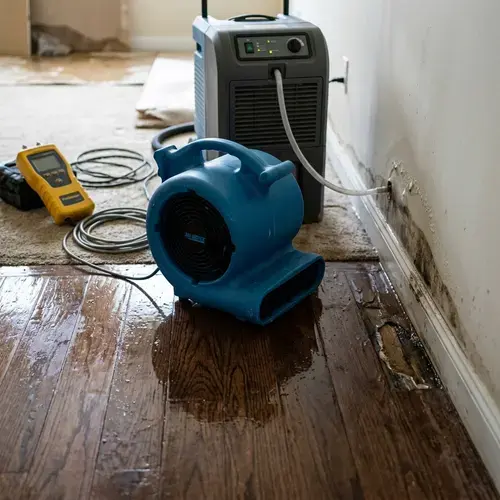
A frozen pipe water damage job often starts with a small opening in the wall to reach the wet cavity. Drying equipment then runs until readings match a dry reference.
A loss caught at the thaw commonly runs $1,500 to $4,000. When two floors are wet it can run $4,000 to $8,500, and a pipe that ran for hours can reach $8,500 to $14,000+.
- Water is extracted from floors and the wall cavity is opened.
- Wet insulation is removed and the ceiling below is checked.
- Air movers and dehumidifiers dry the framing and subfloor.
- A burst pipe water damage repair adds pipe and fitting replacement once the water is stopped.
Getting ready across the area
The same fall steps apply in nearby cities with cold winters. The Grand Rapids service area sees about 75.6 inches of snow a year, including lake effect snow, and the pipes there face the same cold.
A short walk through the house in October, with a flashlight and a list, catches most weak spots before the first freeze.
- Check pipes in every outside wall, not only the basement.
- Note which rooms stay cold when the heat is low.
- Keep the shutoff location where everyone can find it.
Questions
How cold does it have to get for pipes to freeze?
Pipes begin to freeze when the air around them drops below 32 degrees for long enough. Pipes in exterior walls and unheated spaces reach that point first, especially in a deep freeze.
Do all frozen pipes burst?
No, but ice can split a pipe before it melts, and the split shows only at the thaw. A pipe that froze should be checked even if it still runs.
Why do Wyoming homes need extra pipe checks?
Many are 1950s to 1970s homes with copper and some galvanized supply pipe in basements and exterior walls. Older pipe and fittings are more likely to fail under stress.
Can a split pipe flood the ceiling below?
Yes. Water can run inside a wall and drip through the ceiling of a lower floor before a stain appears.
Is a frozen pipe covered by homeowners insurance?
Many policies cover sudden pipe bursts, though conditions may apply, such as keeping the heat on. The insurer can confirm what applies.