
Walker has more shared walls than most people expect. In 2025 the city had 3,457 apartment units in named complexes and 861 condo units, plus 117 duplex structures with 234 units and 17 four-plex structures with 68 units. When a washer hose or dishwasher supply fails in one of those units, the water rarely stays put.
Key takeaways
- A leak in one unit often reaches the ceiling and walls of the unit below, so two households have a loss.
- About 31.6% of Walker households are one person, and a slow leak in a home with nobody around can run for days.
- Residents should shut off the water supply, photograph the damage and report the leak to the property manager or association right away.
- Wet drywall and insulation in the ceiling are dried or removed, and the joist spaces are checked with moisture meters.
- Documentation protects both the resident above and the resident below.
Why shared buildings carry more risk
Walker had 10,797 housing units and 10,470 households in 2020. A large share of those units sit in buildings where one floor is another household's ceiling.
Large complexes include Apple Ridge with 807 units, The Orchards with 663 units, Green Ridge with 624 units and Westown with 199 units. In any building of that kind, plumbing runs through shared walls and floors.
- Water follows pipes, studs and joists, so it can travel well past the room where it started.
- A leak above a bathroom can wet a bedroom ceiling below.
- Water inside a wall may not show on the surface for days.
Where these leaks start
The source decides how fast the water spreads and how wide it spreads.
- Washer hoses that crack or pop off the fitting.
- Dishwasher supply and drain connections.
- Refrigerator ice maker supply pipes.
- Toilet supply and wax ring failures.
- Bathtub and shower drains and overflows.
- Water heater tanks in closets or small utility spaces.
What each household does first
The first steps differ depending on whether the leak starts in the unit or comes down from above.
The resident where the leak starts
Shutting off the water is the first priority. Most appliances and fixtures have a shutoff valve at the wall or under the sink.
- Close the valve or the main shutoff for the unit.
- Wipe up standing water and move items away from wet floors.
- Notify the property manager or the association.
- Photograph the source and the damage.
The resident below
A stain or sagging ceiling means water is above and may be inside the drywall. A ceiling that bulges can fail and drop wet material.
- Move furniture and electronics out from under the wet area.
- Place buckets and keep people away from a bulging ceiling.
- Turn off ceiling lights and fans that are near the wet area.
- Report the leak in writing and send photos.
What ceiling and wall drying involves
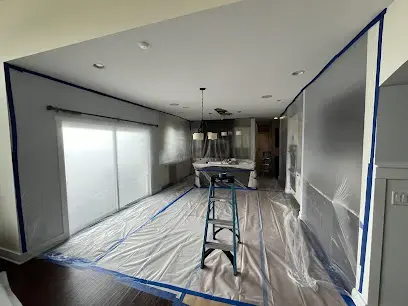
A ceiling leak water damage job starts with finding the source and the extent of the wet area. Thermal imaging and moisture meters show where the water went.
Costs depend on how much opens up. A small stain can run $800 to $2,000, an opened ceiling $2,000 to $4,000, and a loss that reaches two floors $4,000 to $6,500+.
- Sagging drywall is cut out and removed with wet insulation.
- Joist bays are dried with air movers and dehumidifiers.
- Walls below are checked for moisture and opened if readings stay high.
- Daily readings show when the structure has reached a dry reference.
When the source is an appliance
A washer or dishwasher leak adds floors and cabinets to the list. An appliance and supply hose leak is often cheaper when it is caught quickly, with a typical range of $700 to $2,000.
A slow leak behind a cabinet or under a floor can run for weeks. That kind of loss can reach $4,500 to $7,000+, because flooring and cabinet bases may need to come out.
- Check the floor around the washer and dishwasher for soft spots.
- Replace rubber hoses that are cracked, bulging or stiff.
- Look under the sink and behind the fridge when a musty smell appears.
Preventing the next leak in a shared building
Most unit to unit leaks start with a part that has worn out. A short check twice a year catches many of them, and it costs little next to a wet ceiling.
Condo owners, renters and landlords all have a role, since a failure in one unit affects the households around it.
- Replace rubber washer hoses with braided steel hoses and write the install date on the hose.
- Pull the washer out and look behind it for drips or damp walls.
- Check the dishwasher and sink connections for crusty fittings or drips.
- Test the shutoff valves under sinks and toilets, so they move when needed.
- Do not leave the washer or dishwasher running while the home is empty.
- Report any stain, bubble or musty smell on a ceiling or wall right away.
Condos, duplexes and who handles what
The rules for who pays and who repairs depend on the building. A renter reports the leak to the property manager, while a condo owner usually starts with the association and the owner's own policy.
Duplex and four-plex owners may share a wall without sharing an association. Written notice and photos help all parties settle what happened.
The Walker service area covers the neighborhoods and ZIP codes where this work is done.
- Renters should ask whether renter's insurance covers their belongings and temporary housing.
- Condo owners should ask what the association's policy covers inside the unit.
- Everyone should keep receipts and a log of dates, calls and photos.
Questions
What should a resident do if a neighbor's leak damages a ceiling?
Move belongings out of the wet area, photograph the damage and report it in writing to the property manager or association. A restoration team can dry the ceiling and walls while the claim is sorted out.
Can a wet ceiling be dried without opening it?
Sometimes, if the water was clean and caught early. A sagging or bulging ceiling is usually opened, since wet drywall and insulation hold water.
Who pays when a leak in one unit damages another?
It depends on the cause, the lease or association rules, and the policies involved. Documentation from both households helps the insurers decide.
Why do leaks in one person households last longer?
About 31.6% of Walker households are one person, and nobody may be home to notice a slow leak. A small drip can run for days before a stain appears.
Do condo owners need their own insurance?
Usually yes. An association policy often covers the building, while the owner's policy covers what is inside the unit, so both may matter after a leak.